Co-Workers

Philippians 2:19-30
March 8
David A. Davis
Jump to audio


The second half of the second chapter of the Apostle Paul’s Epistle to the Philippians reads like the announcements in a service of worship. First comes a soaring opening hymn that trumpets the cross of Christ and the divine exaltation of Christ. “In the cross of Christ I glory, towering o’er the wrecks of time, all the light of sacred story, gathers round its head sublime.” The congregation gathers in God’s name and through song and prayer offers praise and adoration to God in and through Jesus Christ, the glorified Son of God, the radiant Savior of the world. The people of God acknowledge and confess who they are, whose they are, and to whom they belong. And right there and then, in the flow of the sacred rhythm of worship on the Lord’s Day, sometime before scripture is read and the word is proclaimed and the sacraments are celebrated, sometime early on in the correspondence that is the Sunday morning liturgy; liturgy understood as the work of the people, sometime after a rousing hymn to Christ that everyone knows and everyone remembers, someone stands up and makes the announcement about the Sunday night potluck supper, or tells of the guest speaker coming in a week or so to share their own faith journey, or introduces a Moment of Mission, or shares the news about birth and death in the community of faith.

“I hope in the Lord Jesus”,  Paul writes, “to send Timothy to you soon, so that I may be cheered by news of you….and I trust in the Lord that I will also come soon…Still, I think it is necessary to send to you Epaphroditus, my brother and co-worker and fellow soldier, your messenger and minister to my need.”

Timothy and Epaphroditus. Timothy. It is like a son working with a father in the work of the gospel, Paul says. “No one will be more genuinely concerned for you and your welfare.” Epaphroditus, brother, co-worker, fellow soldier, minister to his need. Paul calls him the messenger of the church at Philippi. Other translations say “representative,” but the Greek word is apostle. Epaphroditus, your apostle. The readers of scripture never learn anything more about Epaphroditus. He leaves the bible stage never to come back. But Paul calls him an apostle. “He wants to see you because he knows you have heard how sick he was. He was so sick he almost died, but he wants to come and let you know he is okay. God had mercy. You can imagine my grief if he died. Like me, he “came close to death for the work of Christ.” “Welcome him then in the Lord with all joy, and honor such people.” Honor such people. Honor people like Epaphroditus. Honor Epaphroditus,

After “let each of you look not to your own interests, but to the interests of others.” After “he emptied himself, taking the form of a slave….being found in human form, he humbled himself  and became obedient to the point of death.” After “God also highly exalted him and gave him the name that is above every name, so that at the name of Jesus every knee should bend, in heaven and on earth and under the earth, and every tongue should confess that Jesus Christ is Lord to the glory of God the Father.’ Not long after THAT, Paul, writing from prison, writing in chains, extoling the glorified Risen Christ, Paul says to the church at Philippi, “let me tell you about Timothy and Epaphroditus. You should honor people like them.

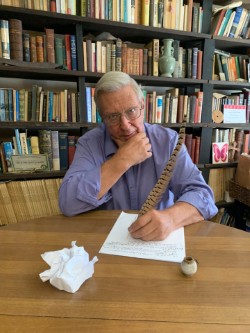
Professor Dan Migliore taught at Princeton Seminary and worshipped in these pews as a part of the Nassau Church community of faith for more than fifty years. Dan died this week, surrounded by those who loved him most. Just a few weeks ago, Dan told me that he taught more than 4,000 students at the seminary in the Introduction to Theology class alone. It is impossible to quantify the impact of Dan Migliore on the church of Jesus Christ through his teaching of generations of pastors, including me. Two weeks ago, as I was working on my sermon, I pulled a commentary on Philemon and Philippians off my shelf. The author of the commentary is Dr. Migliore. To give you a glimpse of the privilege and honor of my ministry here at Nassau, the book is inscribed. “For Dave Davis, dear friend, valued colleague in ministry, and faithful preacher of the Word of God. Dan Migliore September 19, 2014”.

It is indeed fitting this week, as Dan Migliore joins the Church Triumphant, to draw upon his faith to help us seek understanding when it comes to this rather jarring transition in Philippians 2. Here in one chapter, from the glorious rhetoric and poetry that proclaims the self-emptying of Jesus as servant and exalts Christ as Lord of all, to the church newsletter. Yes, a disconnected, even disorienting move that leaves the reader wanting to just read on and pay little attention to Timothy and Epaphroditus.

Allow me to let my friend Dan have the ah-ha moment of the sermon. May his memory be a blessing. To this exact conundrum in the last part the second chapter, offering his take on Paul turning to Timothy and Epaphroditus, Dan writes “As we have emphasized repeatedly, there cannot be the least doubt that, for Paul, what Christ did in emptying himself and becoming obedient even to death on the cross stands far about any acts of humility, love, service, and sacrifice on the part of his disciples. Christ is the supreme example because he is also and exclusively our Savior. Yet the free grace of God in Christ by the power of the Holy Spirit enables his followers to participate and bear witness to-sometimes a costly witness to- his work….For Paul, he concludes, “an analogy can be discerned between the way of the Savior and the way of his faithful servants….No more than an analogy! No more than a faint resemblance.”

In other words, in Timothy’s faithful work of the gospel alongside the Apostle Paul, and in Epaphroditus’ care for the prisoner, his looking not to his own interest but to the interest of others, there is a glimpse, a whiff, an echo of the work of Christ. A Christ-like witness in the mundane, yet holy, in the ordinary, yet extraordinary, in the nitty gritty but actually profound aspects of what it means to be a disciple of Jesus Christ, the self-emptied exalted Son of God. That by his grace, his grace alone, you and I are called to be Christ-like to one another. Or as the hymnwriter puts it, “Will you let me be your servant, let me be as Christ to you? Pray that I may have the grace to let you be my servant too”.

If, then, there is any comfort in Christ, any consolation from love, any partnership in the Spirit, any tender affection and sympathy, make my joy complete: be of the same mind, having the same love, being in full accord and of one mind. Do nothing from selfish ambition or empty conceit, but in humility regard others as better than yourselves. Let each of you look not to your own interests but to the interests of others. Let the same mind be in you that was in Christ Jesus”.  You don’t need me or any preacher to tell you how absolutely, positively, literally, how counter-cultural, other-worldly, hard to find anywhere in the public square that such Christ-like behavior is today. What is also of note here in Philippians 2, according to the biblical witness, we’re not talking about Martin Luther, or Dietrich Bonhoeffer, or Martin Luther King, or Mother Theresa, or some other saint or martyr or giant in the church’s history; the history of the Christian witness. Yes, Timothy is the recipient of a few biblical letters, and Epaphroditus is not mentioned anywhere else. So on the bible’s scale, they are minor characters at best. Epaphroditus and Timothy. “Honor such people.”

During the program year of 2005-06, Nassau Presbyterian Church and Witherspoon Street Presbyterian Church joined together to celebrate 250 years of Presbyterianism in Princeton. We had opening and closing worship in McCarter Theater, four banners were made that rotate 2 by 2 between the two congregations, other celebrations took place, and there was a series of academic lectures on the history that were then published in the Journey of Presbyterian History. Professor Jim Moorhead, who was a student of Dr. Migliore, then taught alongside him for decades. Dr. Moorhead’s lecture was about Presbyterians in Princeton and at the Seminary in the 1920’s. One line in that lecture I have carried with me and returned to on more than one occasion. As he spoke about the blistering theological debates of the time and the iron fist of Jim Crow at its height, Professor Moorhead asked what impact it all had on the two congregations. “Part of the charm of congregational life,” he said, “is that through its enduring patterns of worship and devotion, it allows people to look beyond temporary issues and connect them with the rhythms of the eternal.”

My takeaway from Jim’s line, why I carry it with me, is not that congregations ignore the complexities, the challenges, the head-spinning and head-splitting impact the world brings, and stick heads into some kind of naïve religious sand. No, quite the opposite. I take Dr. Moorhead, who, along with Dr. Migliore, spent their careers not just as academics, but as Drs of the church. My takeaway is that when disciples in the Body of Christ face the complexities, the challenges, the head-spinning, head-splitting impact the world brings, as the church raises its prophetic voice and as Christians seek to do justice, love kindness, and walk humbly with God, all in big steps and little steps, the church is still the church. And the ingrained patterns of congregational life by God’s grace and in the power of the Holy Spirit, hold each of us closer to the heart of God. When war is once again unleashed, or maybe better said, when wars never cease, and masked federal agents roam the streets, and our neighbors are frightened, and the lines at food pantries, including the one downstairs, are pretty much out the door, and the idolatry of gun violence and the Second Amendment never lessens, the church still does church. We still take food to a family sitting vigil at the bedside of a dying loved one. We still bury our dear. We still baptize our children and teach them to love their neighbor and to sing about Jesus. We still gather to praise and to pray and to yes, rejoice. We still yearn to look not to our own interests but to the interests of others. We still look, by the grace and power of Christ the Lord of all, to somehow be Christ-like to one another and in the world. “Honor such people”, Paul wrote.

Every now and then, on a Sunday morning, on some occasions, at coffee hour between services, we have what we call around the church office, “an expanded coffee hour.” Jose Cintron prepares special food beyond our normal coffee hour fare. You may not know this, but during the first service, from where I sit here in the chancel, as Jose is cooking, the appetizing, enticing aroma wafts in just a bit. Just a whiff. I might be the only one who can smell it. Just a whiff. Just the slightest resemblance, Dr Migliore wrote, the slightest resemblance in our Christ-like witness to Christ himself, the self-emptied, exalted Savior and Lord. Just a whiff.  Not just every now and then, but every Sunday, every Sunday, I sit there, and I stand here, and I look out at you, and I get just the slightest glimpse, a bit of a wiff, the faintest echo of Jesus himself. And I have to tell you, it is very much a part, you are very much a part of what holds me close to the heart of God.


#MissionMonday – Centurion

Seeking Freedom for the Innocent in Prison

Nassau’s Mission & Outreach team is extending its February focus on justice and peace to celebrate the work of Centurion, one of our mission partners. Centurion is dedicated to the vindication of the wrongly convicted as well as offering supportive services for incarcerated and exonerated clients. The work of Centurion makes real our Micah 6:8 mandate to do justice, love kindness, and walk humbly with God. 

Learn More (link)


Follow Centurion online:

Posted in top

God’s Doing

Philippians 1:27-30
March 1
David A. Davis
Jump to audio


Only. The word is either lost on the scripture’s page or maybe it leaps off the scripture’s page. Only. In the Greek text, this only. Only this. Only. Sort of a strange way to start a sentence. If I have done my homework well, it is not at all that common a way to start a sentence on the scripture’s page either. Only. The very few times I could find a sentence starting with only in the New Testament, were in the writings of Paul. Paul, here in Philippians. Here in what I read to you from chapter 1. And in chapter 3 at verse 16, Paul writes, “Only let us hold fast to what we have attained.” Only. In II Timothy, Paul writes, “Only Luke is with me. Get Mark and bring him with you.” But that’s a different meaning. Only. “Only, live your life in a manner worthy of the gospel of Christ.” The translation on the bulletin cover this morning is from the Common English Bible: “Most important, live together in a manner worthy of Christ’s gospel.” In his commentary on The Epistle to the Philippians, Karl Barth offers this translation of the Greek text: “Just one thing!” “Just one thing! Live your life in a manner worthy of the gospel of Christ.”

Just one thing. Here in Chapter 1 of Philippians, the Apostle Paul expresses his deep gratitude for the church. Thanking God for their sharing the gospel. He tells them of his confidence that Christ is at work among them, doing good work. He writes of his profound love and compassion for them and prays that their love would overflow more and more. He shares with the church that his imprisonment has actually served to spread the gospel and that, even in chains, he and others will not stop boldly proclaiming the gospel without fear.  All that matters is that Christ is proclaimed. Early on in his letter to the Philippians, Paul wrestles with the imminent possibility of his own death while insisting that he continues to rejoice. Christ shall be exalted either in his life or in his death. “For to me, living is Christ and dying is gain.” Paul knows his life and his death are in God’s hands and he expresses his desire to see them again so that together they can boast, and bask, and live in Christ.

After all of that, just here in the first chapter of Philippians- the church’s faithfulness, love and compassion for one another, his imprisonment, the bold proclamation of the gospel, life and death, and life together in Christ- after all of that. Only. Only. Just one thing. Most important. “Live your live in a manner worthy of the gospel of Christ.” We should not forget that the Apostle Paul is the one who writes in Romans about the remnant chosen by grace. “If it is by grace, it is no longer on the basis of works, otherwise grace would no longer be grace.” (Rom 11:8). And as I quoted from Ephesians last week: “For by grace you have been saved through faith, and this is not your own doing; it is the gift of God- not the results of works, so that no one may boast.” The Apostle Paul on saved by grace, not by works. But Paul continues there in the 2nd chapter of Ephesians, “For we are what God has made us, created in Christ Jesus for good works, which God prepared beforehand to be our way of life.” Or in other words, “Only, live your life in a manner worthy of the gospel of Christ!” Only.

It’s not just about belief or doctrine or piety or religiosity. According to Paul, it’s about how you live. And living a life worthy of the gospel is not just about the individual. A life worthy of the gospel includes life together as the body of Christ. Paul’s exhortation to the Body of Christ at Philippi is to live a common life together worthy of the gospel. “So that, whether I come and see you or am absent and hear about you, I will know that you are standing firm in one spirit, striving side by side with one mind for the faith of the gospel…” Standing firm by God’s Spirit along with others. Side by side. Maybe not agreeing about everything, but when it comes to the faith of the gospel, being of one mind. A congregation’s life together is a reflection of the gospel of Jesus Christ. As is so often said in the words of welcome, “we seek to embody the love of God in word and deed in our life together and individually in our life in the world.”

Back in the fall, Cathy and I drove down for the 275th anniversary of my first congregation, The First Presbyterian Church of Blackwood. At the luncheon, I was talking to the pastor who succeeded me there. As we chatted over lunch, he shared that he was no longer serving a church. He was working as a hospice chaplain. He went on to explain that the pandemic ripped apart the church we went to serve after he left Blackwood. That church is not far from here, over in Hunterdon County. He said there were many strong opinions about protocols and COVID-related decisions, and whatever he and the session decided upset someone, and all sides took it out on him. “Dave, they ate me up and spit me out,” he said. It won’t shock you to know that congregations don’t always stand side by side with one mind for the faith of the gospel. Here at Nassau, I know that not everyone agreed with all the decisions, the protocols, and the timing that were made in those days. But I can tell you, I am the only pastor I know, seriously, who did not have a member of their congregation yelling at them. For which I remain deeply grateful to you and to God. The Apostle Paul makes it very clear that living a life in a manner worthy of the gospel of Christ has everything to do with the collective life of the community of faith.

“I will know that you are standing firm in one spirit, striving side by side with one mind for the faith of the gospel, and are in no way intimidated by your opponents….This is God’s doing. For God ha graciously granted you the privilege of believing in Christ, but of suffering for Christ as well—since you are having the same struggle that you saw I had and now hear that I still have.”  What can’t be known here is the specifics of what Paul is referring to when it comes to the suffering, the struggle. The struggle Paul is “having now” is clearly a reference to his imprisonment. But his reference to others having the privilege of not just believing in Christ but suffering, struggling for Christ as well, is less clear. And yes, wrapping one’s head and heart around the notion of you and me suffering for Christ is a longer conversation with a whole lot more to ponder historically, theologically, biblically, pastorally.

What I do now, today, this morning, this week, these days, is that it is not hard to ponder the Apostle’s plea for the one thing, the most important, the only. It is not difficult in one’s sacred imagination to ponder living a life in a manner worthy of the gospel and the call not to be intimidated by opponents. It is not difficult these days to acknowledge that you and I have the privilege of not only believing in Christ, but struggling for him as well. Because living our faith, living the faith of Jesus Christ, living the faith in Jesus Christ today, this week, this morning, is difficult. It is a challenge. It isn’t hard to know what to believe but it is really hard to know what to do. And when Paul affirms that it is God’s doing, yes, our salvation is God’s doing. Yes, living in a manner worthy of the gospel of Christ is also God’s doing. And living the faith in the face of opponents and the ever-present darkness of the powers and principalities is God’s doing. Believing in Christ and suffering/struggling for him is God’s doing. It’s all God’s doing. God’s doing in Paul’s words. Or in the words of Professor Nancy Lammers Gross, shared in the children’s time in the last few weeks. “God’s got this!” Say that with me, “God’s got this.” Affirming that God’s got this, that it is God’s doing, is the only way I know to live.

As we study one of Paul’s letters this Lent, I want to share with you that I signed a letter this Lent. An open letter signed by hundreds and hundreds of Christian faith leaders around the nation. It is entitled “A Call to Christians in A Crisis of Faith and Democracy”. It is a call for a courageous and faithful witness to the gospel of Jesus Christ today, this week, these days. It was released on Ash Wednesday. Early on, it reads, “As Christians in the United States, representing the breadth of Christian traditions and one part of our nation’s religiously plural society, we are compelled to speak out more boldly at this time.” Later in the letter: “We refuse to baptize domination. We refuse to sanctify cruelty. We refuse to confuse authoritarian power with divine authority. We choose to resist, calling forth the righteous demands of our faith rooted in the teachings of Jesus. Religion should not be used to deify politicians or justify their abuses. When it is, faith ceases to be faithful and becomes a weapon of both heresy and hypocrisy.”

Near the conclusion, several commitments are listed. They are so simple, so Sunday School-like, so basic gospel-like, that it reminds me of how often I have said to you that when it gets harder and harder in the world and the nation to live the faith,  the simplest parts of the gospel become all the more clear and compelling. The list of commitments? Protect and stand with vulnerable people. Love our neighbors. Speak truth to power. Seek peace. Do justice. Strengthen democracy. Practice hope. Ground discipleship in love and prayer.

Yes, clear and compelling. Not complicated, yet not really debatable when it comes to the teaching of Jesus and the writing of Paul. It occurs to me that it is sort of a primer on how to do, how to live, how to be “only”.  David Buttrick, who taught and wrote about preaching for a generation at Vanderbilt, once said that the best measure of faithful preaching is the redemptive life of the community of faith. Not the rhetoric, not the sermonic flourish, not the biblical interpretive twists, not the memorable illustration. No, the faithfulness of the lives of those in the pew.

Most important. Just one thing. “Only, live your life in a manner worthy of the gospel of Jesus Christ…”

Only. Remember the only. Never forget the only. Together Body of Christ at Nassau Church, today, this week, these days, let’s lean into, let’s commit, let’s live the only.


The Good We Do for Christ

Philemon
February 22
David A. Davis
Jump to audio


“When I remember you in my prayers [Onesimus], I always thank my God because I hear of your love for all the saints and your faith toward the Lord Jesus. I pray that the sharing of your faith may become effective when you perceive all the good that we may do for Christ. I have indeed received much joy and encouragement from your love, because the hearts of the saints have been refreshed through you, my brother.” I pray that your faith may become more effective, more powerful, more active as you perceive all the good that we may do for Christ. All the good we do for Christ. The good we do for Christ.

Paul’s Letter to Philemon is notable for its brevity. Compared with the rest of the Apostles’ canon, it is also notable for the lack of a profound theological argument, as in Romans. Or the poetic style reflected in Paul’s description of Christ in Colossians: “He is the image of the invisible God, the firstborn of all creation.” Or the soaring proclamation of resurrection hope in I Corinthians 15. Or the affirmation of the bedrock of the faith in Ephesians: “For by grace you have been saved through faith, and this is not your own doing; it is the gift of God.” As the Letter to Philemon sits in Paul’s portfolio, some may think it is rather….pedestrian.

Paul is under house arrest for preaching the Gospel of Jesus Christ. Writing from Rome, maybe Ephesus. It’s a letter to Philemon, Apphia, Archippus, and the church in the house. Paul writes an appeal for Onesimus, who has become like a son to Paul. Onesimus, whose name means “useful,” is a slave previously working in Philemon’s home. Some suggest that maybe Philemon had dispatched Onesimus to assist Paul during his incarceration, and it has long since passed the time when Onesimus was due to return. It could be that Paul is sending Onesimus back to Philemon in hopes that Philemon would allow him to return to Paul. Of course, more importantly, Paul is asking for a reconciling transformation in their relationship. That Philemon would welcome Onesimus back “no longer as a slave but more than a slave, a beloved brother—especially to me, but how much more to you, both in the flesh and in the Lord.” The Apostle underscores his request with the offer to cover any expenses incurred or any wrongs while Onesimus was away. “Charge that to my account…I will repay it”.

It is also striking how this oh so short biblical letter that somehow made the canon formed by the church councils is so un-bible like. Little to none when it comes to reflecting that strange old world of the bible. No demons. No healings. No loaves and fishes multiplied. No walking on water. No miracle. No thousands are joining the church. No tongues of fire and people hearing in their own tongue. No Damascus road voice from heaven and blindness, and conversation for Paul. No, Paul is writing to Philemon on behalf of one man, a slave. And Paul is asking Philemon to love him.

Your love for all the saints. Joy and encouragement from your love. An old man writing and appealing based on love. An old man appealing for a younger man who has become like a son to him. An appeal for love. “Welcome him as you would welcome me.” Oh, and prepare your guest room for me. Pray that I can come and see you soon. A letter so un-bible like. And yet, a letter so everyday. A letter so like the church in the house. The body of Christ. Little talk about faith, but a letter packed full of faith. No theology in words, but a profound theological statement about life in Christ. Not a lot of writing about religious things, but what is described is holy. No religious talk. Just a letter that is full of talk about the Christ-like life. The Apostle Paul, writing from imprisonment bound by the empire, asks Philemon for a radical love that upends culture and humanity’s entrenched way of life. The kind of love that turns upside down how the world works, and challenges how empires and principalities function, and threatens those in power who seek wrap the weak and most vulnerable in chains. This short letter devoid of miracles is actually quite miraculous. Paul appeals for one man named Onesimus. Paul is asking for the very love of Jesus Christ to be unleashed, set free, and on the loose in and through the church in the house. Paul asks Philemon to imagine and to so live all the good we can for Christ.

This week, I started reading Mother Emanuel: Two Centuries of Race, Resistance, and Forgiveness in One Charleston Church. It is written by Kevin Sack, who, as a journalist for the NYTimes, was assigned to cover the horrible murders at the Mother Emanuel AME Church 10 years ago in Charleston, South Carolina. Nine African Americans were shot and killed during their weeknight bible study by a young white man who bought the gun with money his father gave him. The author, along with anyone else following the story at the time, was so struck by the forgiveness voiced by family members almost immediately in the aftermath of their loved ones being murdered. He and they describe a kind of otherworldly, almost divine experience of forgiveness. Kevin Sack set out to write about the history of Mother Emanuel in the context of the African American experience.

The book begins with a detailed description of what the church folks at Emanuel came to call “The tragedy”. The chapter concludes with the author telling of the funeral for the pastor, the Rev. Clementa Carlos Pinckney, conducted at the local college arena. You will remember that President Obama gave the eulogy and concluded the homily singing “Amazing Grace.” Sack writes that the president scrapped what his speechwriters gave him and “rebuilt the scaffolding of the eulogy” around the hymn. Just before starting to sing, President Obama quoted the novelist Marilynne Robinson, who defined grace as “that reservoir of goodness”. “That reservoir of goodness that enabled humans to treat each other with extraordinary generosity.” To be honest, revisiting President Obama’s sermon that day while looking out at the nation today was a bit disheartening. “If we can find that grace,” he preached, “anything is possible. If we can tap that grace, everything can change.” Then, after a pause, he started to sing.

To use Paul’s language, the preacher that day was pointing to all the good we can do for Christ. Standing up in the midst of an unspeakable, unimaginable tragedy and daring to believe that ordinary people can do extraordinary acts of love and forgiveness, empowered, emboldened, and inspirit by God’s grace. Standing up this morning and daring to believe that ordinary people can do extraordinary acts of love and forgiveness, empowered, emboldened, and inspirit by God’s grace.  To use Paul’s own words, daring to believe that there is “a still more excellent way.”  It is not aspirational. It is prophetic. “If I speak in the tongues of mortals and of angels, but do not have love, I am a noisy gong or clanging symbol. And if I have prophetic powers, and understand all mysteries and all knowledge, and if I have all faith so as to remove mountains, but do not have love, I am nothing.” In First Corinthians, Paul preaches it. In Philemon, Paul, Onesimus, Philemon, and the church in the house….they live it. The only reason scholars can offer for how this short, pedestrian yet miraculous letter stayed in the canon is that Philemon must have said yes. Everyone knew Philemon said yes. He said “yes” to love and all the good we can do for Christ.

Come to the Table this morning to be nourished for your life in Christ this afternoon. Christ invites you to join the Table fellowship along with his disciples, the great cloud of witnesses, the communion of saints, and the church that’s in the house. Come with praise and thanksgiving to remember the One who could talk theology with the best of them in the synagogue and go and eat with sinners afterward. He would argue with the most educated and most powerful and then go hang out with the outcasts and touch the unclean. The Messiah, the Savior of the whole world, the Ruler of the Universe, lived, died, and rose again with a kind of radical love that upends culture and humanity’s entrenched way of life. A kind of love that turns upside down how the world works, and challenges how empires and principalities function, and threatens those in power who seek wrap the weak and most vulnerable in chains.

Here at the Table, the words are few: “Take, eat, this is my body broken for you”. The words of Jesus, who gave his life for our sins and the sins of the world. Here, around this table, we affirm our life in Christ, and by his grace all the good we can do for him. For it is Jesus Christ who takes your hand, and turns to the Creator and says, “Charge it to my account.”

“When I remember you in my prayers [Paul writes to the church in the house]], I always thank my God because I hear of your love for all the saints and your faith toward the Lord Jesus. I pray that the sharing of your faith may become effective when you perceive all the good that we may do for Christ. I have indeed received much joy and encouragement from your love, because the hearts of the saints have been refreshed through you, my siblings in Christ.”


#MissionMonday – Ukraine Resilience Center

This month, the Nassau Church Mission & Outreach Committee pledged $25,000 to support the construction of a Social, Healing, and Educational Center in Stradch, Ukraine. The Parish of the Assumption of the Blessed Virgin Mary in Stradch has been working throughout the war to provide spiritual and psychological support to those impacted by the conflict, and established a Resilience Center to that end. The parish recently acquired a new building to expand and continue their work, and requested funds to create a new Center in that space. We at Nassau are inspired by the parish’s work to promote peace and healing!

#MissionMonday – The Neighbor Fund

Nassau Church invites all our community members and friends to support the Neighbor Fund!

This initiative of the Princeton community provides financial support to people in our area who are impacted by immigration. Your generosity makes it possible for this Fund to meet the needs of neighbors whose family networks, livelihoods, and stability have been disrupted. You can learn more and contribute to the Fund using the button below.

Whether or not you can make a gift at this time, you can support immigration-impacted neighbors by keeping them in your prayers and hearts.

“I was a stranger, and you invited me in” (Matthew 25:35).


Learn More & Donate Online


On Sunday, February 15, 2026, John Thurber gave a Moment for Mission during our Service of Worship focusing on the Neighbor Fund:

How it Began

Last summer, in the wake of large-scale immigration operations by ICE here in Princeton, our Mission and Outreach Committee launched the Neighbor Fund alongside our trusted community partners. We began with a seed of $20,000 and a simple, faithful prayer: that we might provide a measure of justice and stability to families whose lives had been upended by ICE detentions.

Today, we witness to an abundance of generosity that has far exceeded our initial hopes.

Through your support, and the radical generosity of the wider community, we have already raised over $150,000. Most movingly, 75% of these contributions have come from outside our own doors. Nassau Church has become a trusted vehicle for the whole community’s desire to do what is right.

We have seen neighbors helping neighbors—many with no formal ties to this sanctuary—who recognized in the Neighbor Fund a clear, equitable, and compassionate way to put love into action.

How the Funds Are Working

These funds are working every day. They are paying legal fees that give parents a fighting chance to stay with their children and covering rent and groceries for families who have lost their primary breadwinner to detention.

To date, we have supported 13 families and individuals with nearly $104,000 in committed funds.

The Need Continues

But the need is not a thing of the past. We continue to receive new requests for assistance, all related to ongoing ICE activity in our area.

Just one month ago, two more Princeton residents were detained, including a father of four from the Witherspoon Jackson neighborhood who has a child at Community Park School. A week later, a third resident was detained on his way home from work.

These incidents remind us that we are no longer responding to a single operation; we are sustaining a covenant of protection for the vulnerable in our midst.

We are not just a church in the heart of Princeton; we are a heart for the people of Princeton.

How You Can Help

As we anticipate what may happen in the months ahead, we ask you to consider a renewed, generous gift to the Neighbor Fund. Your support ensures that when our neighbors call out in a moment of fear or financial crisis, we remain ready to answer.

You can support the Neighbor Fund with a designated gift online or by writing “Neighbor Fund” in the memo line of your check.

Thank you for your continued prayers, your trust, and your unwavering resolve to build a community where every neighbor is welcomed and respected.

An Apostle in Prison: Paul’s Letter to the Philippians

Adult Education for Lent (February 22 – March 29, 2026)
Sundays, 9:30 a.m., in the Assembly Room, unless otherwise noted

This Lent, Adult Education will explore Paul’s Letter to the Philippians, a short yet profound letter written from prison. Reading one chapter each week, we will consider how faith, joy, suffering, and hope take shape in the life of the early church — and in our own lives today.

Together with preaching and Lenten Small Groups, this Linked-In series invites us into a shared season of reflection, study, and conversation.

Audio recordings of the February 22–March 22 sessions will be available only to participants in the Lenten Small Groups, at the request of the speaker.

The March 29 session with Hanna Reichel will be recorded and posted below its description.

🎧 Listen On the Go!
Adult Education classes and sermons are also available as podcasts on Amazon Music, Apple Podcasts, and Spotify. Search “Nassau Presbyterian Church” — follow or subscribe to be alerted when new recordings are uploaded.


Download Flyer (pdf)


Matthew Novenson is the Helen H. P. Manson Professor of New Testament at Princeton Theological Seminary. Before that, he was Professor of Biblical Criticism and Biblical Antiquities at the University of Edinburgh, UK. His books include Christ among the Messiahs (Oxford, 2012), The Grammar of Messianism (Oxford, 2017), Paul, Then and Now (Eerdmans, 2022), and Paul and Judaism at the End of History (Cambridge, 2024). He is presently writing a commentary on Paul’s Letter to the Philippians.


February 22 | Matt Novenson

Philemon

An introduction to imprisonment as a central context for Paul’s ministry and letters.

return to top


March 1 | Matt Novenson

Philippians 1

Written under dire circumstances, Paul’s letter overflows with affection, courage, and trust in God.

return to top


March 8 | Matt Novenson

Philippians 2

A close look at one of the New Testament’s most important passages about Christ’s self-giving and exaltation.

return to top


March 15 | Matt Novenson

Philippians 3

Paul addresses conflict and competing teachings, emphasizing faith in Christ as the heart of righteousness and hope.

return to top


March 22 | Matt Novenson

Philippians 4

A practical and hopeful conclusion, highlighting reconciliation, generosity, contentment, and shared life in Christ.

return to top


March 29 | Hanna Reichel

For Such a Time as This: Christian Existence in our Current State of Emergency

How do we live faithfully amid rising authoritarianism and the erosion of democratic culture? Hanna Reichel draws on Scripture and historical examples such as the Confessing Church to explore spiritual grounding, communal discernment, and Christian courage in challenging times.


Hanna Reichel is the Charles Hodge Professor of Systematic Theology at Princeton Theological Seminary. A ruling elder in the PC(USA), Reichel also serves on the Theology Working Group of the World Communion of Reformed Churches. For Such a Time as This: An Emergency Devotional is their first book for a wider audience.

We are pleased that Dr. Reichel is available to reschedule after being snowed out in December! Copies of their book, For Such a Time as This: An Emergency Devotional are available for purchase for $15. Contact Lauren Yeh in the church office (email, x106) or look for the book sales table in the Assembly Room in late March.

return to top

Johnsonburg Camp & Retreat Center (not just for kids!)

Camp Johnsonburg – Hope, New Jersey

Looking for a summer camping experience for children or youth in your life (Grades 1–12)?

Camp Johnsonburg, an easy drive from central New Jersey, has been offering experiential Christian education since 1959 in support of the Presbyterian Church in New Jersey.

With a wide variety of sessions and programs, Camp Johnsonburg is known for its commitment to inclusivity, spiritual growth, friendship, and fun. Summer sessions begin June 21.

Learn more and register at campjburg.org/summer-camp/, or speak with Nassau members Penn Bowditch, Lolly O’Brien, Bonnie Galloway, or Elliot Freebourn.


Men’s Retreat at Camp Johnsonburg

February 27 – March 1
All men are invited to a weekend retreat featuring Bible study, small groups, outdoor activities on the 300-acre campus, reflection, and prayer. Rev. George Erlandson will serve as guest speaker, with Rev. Mark Studer leading worship.

Register at campjburg.org/events/new-mens-retreat/.


Women’s Retreat

Adult women are invited to a Women’s Retreat, April 24–26, focused on forgiveness: exploring one of Christ’s most pivotal challenges. The retreat offers space to step away from daily routines and find rest, renewal, and connection through worship, scripture exploration, small-group discussion, reflection, prayer, and time enjoying Johnsonburg’s lake and forested trails.

Guest Speaker: Rev. Heather M. Finck

Register at campjburg.org.

#MissionMonday – Office of Public Witness

Did you know that our denomination, the Presbyterian Church (USA), has an office dedicated to witnessing to our faith in the public sphere? The PC(USA) Office of Public Witness (OPW) leads collective action and advocacy on Capitol Hill and all over the country – to paraphrase a hymn, using the faith we’ve found to reshape the world around.

Recent efforts have included a national film study on the eviction crisis and a walkout in solidarity with immigrant and refugee neighbors.

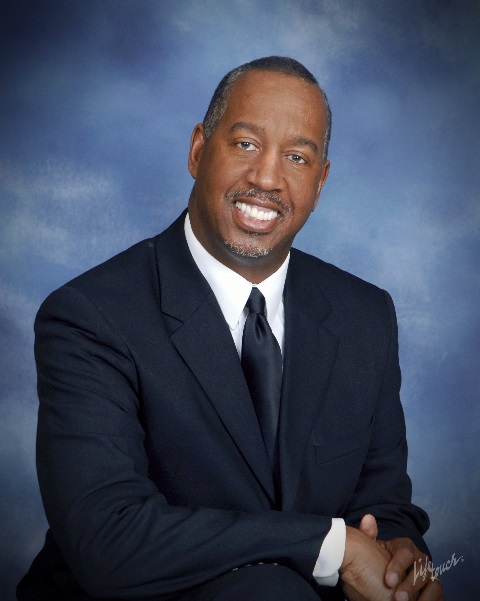
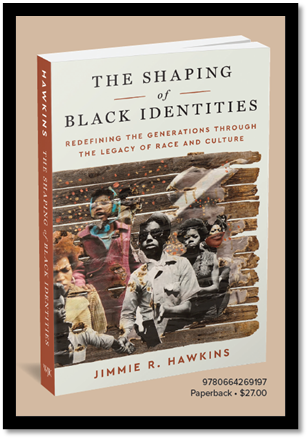
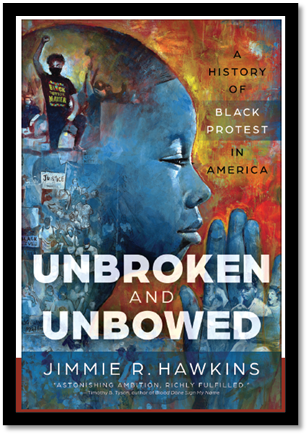
Nassau is proud to support the OPW’s work and witness, and we are excited that on April 19, in partnership with Witherspoon Street Presbyterian Church, Rev. Jimmie Hawkins of OPW will join us for an educational event after worship. Stay tuned for more details!

You can learn more about this denominational effort on their website (button below), where you can also sign up to receive action alerts as part of their mobilization efforts.


Learn More & Sign Up


Follow PCUSA OPW online: