Wednesday, July 27, 7:00 PM
John Witherspoon Middle School 217 Walnut Lane, Princeton, NJ
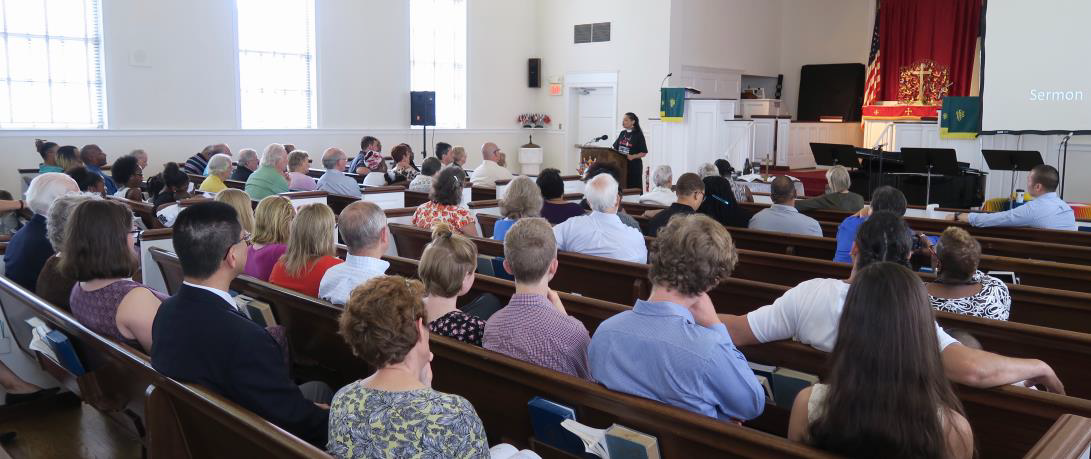
Mayor of Princeton Liz Lempert, Police Chief Nicholas Sutter, Rabbi Adam Feldman of the Jewish Center, and Rev. Matthew Ristuccia of Stone Hill Church invite the entire community to join them in an important event in response to the recent police shootings of African-American men and the sniper attacks on police in Dallas.
On Wednesday, July 27, at 7:00 PM, in the John Witherspoon Middle School auditorium, members of the Princeton community will be gathering together to process our reactions to the deep fissures exposed by these national tragedies.
The bulk of the evening will be devoted to hearing from a representative of the African-American community as well as a representative of the law enforcement community, giving them the opportunity to share their personal perspectives.
In listening to these stories, we as a community will be challenged to examine our own narratives, and to put a human face on the statistics and headlines that have confronted us in recent weeks. Such a challenge is a vital first step in building bridges and taking positive steps toward real reconciliation and growth in our community and our nation.
Join us for this evening of grieving together as we acknowledge the pain and fear engendered by these events, and as we strive for hope and forward movement as a community.
Philippians 4:13
Lisa Nichols Hickman
July 24, 2016
A Post-Modern Life Cycle?
Today, in worship, I want us to consider the various ages and stages of a life-cycle. Now, maybe you studied Eric Ericson in college, maybe you picture that when you consider a life-cycle, his very traditional view of a life-cycle. There are some who are saying that view no longer works because our world is changing is so much. Childhood is changing. Teenage life is changing. Teenagers are entering puberty earlier and earlier because of changes of chemicals and estrogens in our environment. The job market is changing. College students are graduating and sometimes moving home, gaining strength and support there before going back out to the world. And retirement is changing. We have longer and longer life-cycles and this is a good thing, but it takes some planning.
So maybe our life-cycle is changing. Can any of us relate to these changes in the life-cycle? We all are going through these. Because of these changes, some scholars are saying we need a post-modern view of the life-cycle that does not simplify life into childhood, adolescence, and adulthood, and instead allows for some nuances in between.
I care about this today because I care about the church and I care about Christian ministry and I believe that paying attention to what is changing in the life-cycle might better help us with Christian formation beyond Confirmation class, for better pastoral care in the various ages and stages of life, for evangelism and the ways we reach out into the world, and in light of the big prayers in our world, maybe help put us back together as Christians so we can go out into the world and serve.
Maybe you have read a news article about this. College students at Washington University in St. Louis were asked this past year to take a very interesting course, and the course was titled “When I’m 64.” We got it, the Beatles. I am sure there are few Beatles fans in here. Required curriculum that asked the students to think about the changing nature of the life-cycle.
50% of college freshmen will live to be 100 years old. And so the course invites them to start thinking when they are 18 about how to have a meaningful life, a meaningful retirement, how to plan financially and vocationally and spiritually for ten decades of life.
I wonder if it would be helpful for the church to consider such a course, the changing nature of the life-cycle. So much of our faith formation goes into that first two decades, compressing spirituality and service and social justice and mission trips and scripture learning into Sunday school, Confirmation, and mission trips. All before age 18.
But if we change attention a changing life-cycle in those ten decades, then maybe the church is called to think creatively about ways to minister to people across the life span.
Philippians 4:13
Now this one scholar, Frederick Schweitzer, says we need a post-modern view of the life-cycle. But what I want to say, pushing back, is that we do not need a post-modern view because we have Philippians 4:13. Everything we need for wisdom and strength is right here.
“I can do all things through Christ who strengthens me.” Now this is Paul’s letter to the church in Philippi, written while he was in prison. I appreciate my mother-in-law, who makes me appreciate Paul and who says he had so much energy and he was stuck and confined and he could not get the word out and here is this beautiful letter where he talks about “rejoicing the Lord” and “whatever is honorable and true and just, think about these things,” and “I have learned to be content in all circumstances.” Incredible wisdom and joy, topped only by this ten-word phrase, “I can do all things through Christ who strengthens me.”
For Every Age and Stage of Life…
I believe these ten words reflect every age and stage of life, from that first word “I” to the last word “me.” “I” describes that first glimpse of that new child. When Leah was born out in Tuscon, Arizona, it was the best day of our lives. “I” — the unique identity and the miraculous life, knit together in the mother’s womb, blessed here in the waters of baptism. “I” is the beginning stage of the life cycle.
Then we get that great word, “can.” This is a toddler’s first steps, first words, first tumbles. It is why this church is so grateful when space is precious here in Princeton to have that playground right here because toddlers can do great things on that playground. “I can.”
Then we get the word “do.” And when I think about “do,” I think about my time here in youth ministry and all the amazing things our young people can do. They are creative, dramatic, athletic, faithful, and smart. They inspire our best leadership. Three thousand, 5,000, young people just met at Purdue, at Triennium, to think about what they can do in the life of the church in their communities.
As the life cycle moves on, we get to the word “all.” I think about our idealistic young adult days when all things are possible. The world is wide open, no constraints, a future to live into with hope and not cynicism, which comes sometimes in adulthood. Maybe that is why we all love to listen to commencement speeches, because it kindles that hope of all good things within us. Maybe that is why we love living in a place like Princeton where there is a university and a seminary where all things are possible.
I can do all “things.” “Things” might be what happens when you get married, when you have a full-time job, when the calendar starts to fill up, whether it is a written calendar or your digital calendar in your phone. Maybe things are the laundry basket or the routine. Things that take us from the extraordinary parts of life to the ordinary. Maybe technology and our iPhones add to that sense of the things.
Then we get to the fifth word of this life cycle from Philippians 4:13, that word “through.” I can do all things through. “Through” reminds of the resilience by which we get through the tough parts of life. Thanks to friends and churches and prayer we get through cancer treatment, we get through lay offs, we get through addiction, we get through the funeral, we get through relationships where alienation is painful and reconciliation impossible. I heard that prayer for “through” in that beautiful hymn of the psalm.
I think about getting through things when I think of “Going on a Bear Hunt” – I am going on a bear hunt, you can’t go under it, can’t go around it – you gotta go through it.
Thank God for the church, through whom we get strength in that time, in those places of difficult journey.
That’s when we need that next word, “Christ.” The only way we can get through all of that is through Christ who strengthens us, who saves us, who is a companion to us, who is redeemer to us, friend, nourisher, healer, teacher, who is with us to the very end.
Of course there are sometimes in a Christian journey, and we wouldn’t be faithful if we didn’t say this, when we even question who Christ is. I can do all things through Christ, who? Who is this savior? Who is he calling me to be? Is he at work in this broken world today?
This is the place where we pray for belief beyond our doubt. We pray through our struggles and our questions and those places where God is working within us to form us deeper in our life of faith, even in the midst of our doubts and our questions.
Thank God for word number nine, I can do all things through Christ who “strengthens” me. We are allowed us to look back on a life’s journey and see the saving grace of Christ along the way who brings strength to sustain all things. This is the down in your bones faith – deeply engrained even in the strain of circumstance.
Finally, the tenth word comes full circle back to “me.” Our identity is made complete from womb to grave by the presence of Christ who continually saves. But here is where I want to be crystal clear. This is not a journey that is culminated in “me.” This journey is not ultimately about me. This journey is about Christ who calls each one of us into our very best selves so we can serve the gospel and bring about his kingdom. So we are turned loose in this broken world.
Maybe when you are thinking about this text today or on a walk or if you are exercising, if you are driving to the shore, if you are enjoying a quiet moment on a hot day in a hammock, Maybe if you are thinking about these ten words, you might say them slowly to yourself, and pay attention to where you pause. What word catches you today? Because I don’t think life is a linear journey. I think we keep cycling through. There are sometimes when we find ourselves journeying back to “all” or “can” or “I” and finding renewed strength there to continue along with this journey.
Power, The Life Cycle and Dunamis…
In any of those ten places along life’s journey the key word to remember is the word strength. In Greek the word is DUNAMIS. It is like dynamite. The Greek is explosive with what that power of Jesus’ strength means when it intersects a life. It literally means to intensify the sharing power and strength of that new ability Jesus Christ imparts to us. It is bursting forth. That dunamis strengthens every moment along life’s way. Not in a self-serving way, but in a self-sacrificing way, so we have the power to serve in Christ’s strength.
Christian Praxis
The prayer for the church is then is to contemplate the changing nature of the life cycle. I was thinking about this when I was sitting last week at my church, First Presbyterian Church of Sharon, sitting next a mom whose youngest daughter was entering high school senior year. I think that mom was a little fragile. I think about that when I think about the retirees who live in New Wilmington. So many of them live into their 90s, even 100, and they are thinking about ways to stay meaningful and connected to the life of the church and Christian community and being of service in this world.
And so it is a question that people might contemplate in a Christian Ed committee meetings and Session and worship committee, deacon meetings, and staff meetings, how are we reaching out to people and offering this dunamis of Jesus at every age and stage of life in our changing world? It is a prayer. It is a great question to wrestle with.
Confronted with the Strength of Christ
I want to close with one story introducing you to a great lady named Margaret Courtwright. Margaret Courtwright lives in New Wilmington. She is a 96 years old. She goes for her walk every day through town and if I haven’t had my walk that day, I go and put my shoes on, because Margaret has been out walking. Margaret grew up in India. Her parents were Presbyterian medical missionaries and she went to the Woodstock School and because that was such an excellent school Margaret had an unusual life cycle and instead of graduating at age 18, she graduated when she was 16 years old. She left India with a nanny, traveled by boat to London and then to New York City and then by train to Ohio, where she started college at Muskingham University.
Now before I tell you the really important part of Margaret’s story I want to set the picture of how cool Margaret is. So when Margaret is 16 and she gets to Muskingham and she unpacks her trunk from India, she pulls out a zebra skin and lays it out on the dorm room floor. She pulls out an alligator head and a snakeskin and hangs all of that on the wall. And one day after freshman orientation she is coming back into the room and she is opening the door and she can see her roommate there — and this is back in the ’20s — and her roommate is squirting something. I don’t know if they had Febreze back then, but she was spraying everything just to make sure.
You can only imagine how terrified Margaret was to make that journey from India to London to Ohio. And she tells the story of arriving in London on her sixteenth birthday — and this is now 80 years ago — and walking into the National Gallery with her nanny. They walked around, they had a lovely day. And perhaps you can picture Margaret back in the day. She was dressed in gloves and hat and skirt and heels, and they were out on the town. And when she tells of that day and how scared she was, she says that she turned a corner and encountered a painting. And the painting was called “Jesus Before the High Priest” by Gerrit van Honthorst. And when Margaret tells of that moment, she says, Jesus caught my eye that day and he has never let me go since.
If you met Margaret today, she would open her Bible and out would fall a postcard of that painting. It has carried her along in all of the changing ages and stages of her life cycle, for 80 years. What I appreciate about that moment in Margaret’s life stories is that it is really a call for us to keep thinking about the ways we put that Christ before all people. For Margaret it happened in a holy and spontaneous and an answer-to-prayer moment. It has blessed her along life’s way.
I think the work of the church, our call to us, is to think about that dunamis, that saving power of Christ and how that can enter in for anyone who is at that moment of a life cycle journeying through “I can do all things.” So that is my challenge and call to you this day. That you will prayerfully think about, as a church, how you might reach different folks in different places as this crazy world unfolds and as that affects the very nature of our lives.
How can we keep putting before folks that dunamis of Jesus?
Explore the progression and interpretation of early symbols or icons, from those seen in family burial plots to the more elaborate ones seen in the “rural” and lawn park cemeteries of the Victorian era and, later still, in the Memorial Parks of the 20th Century. Modern examples of memorialization and symbolism will be included, as will the changing techniques and skills required by the early slate and sandstone carvers, contrasting with today’s techniques such as laser etching. The program will conclude with photographs taken at The Princeton Cemetery.
Lorna and Phil Wooldridge run Wise Owl Workshops, which was created to teach children about the migration of the Monarch butterfly, but has grown to cover subjects as diverse as gravestone art and native gardening. Lorna currently tutors privately, specializing in dyslexia intervention and remediation. Phil worked for over 20 years in software development and is now working as a tutor alongside Lorna.
Mozart in Vienna
Bill Walker
August 14, 11:15AM
Assembly Room
Learn about Mozart’s years in Vienna and his relationship with Emporer Joseph ll. Discuss the Josephine “enlightenment,” and see how it affected Mozart’s career, shedding some light on the legends of his death and burial.
William F. Walker, bass, has performed as an opera singer, concert soloist, and choral artist throughout Europe and the United States. As an opera singer, Mr. Walker has appeared with the Lyric Opera of Chicago, the Zurich Opera, the International Opera Studio, and the Festa Musica Pro of Assisi, Italy. Now with the Princeton Singers eleven years, Mr. Walker is also bass soloist at Nassau Presbyterian Church.
Developing a Formula for Sainted Women
Sandi Goehring
August 21, 11:15AM
Assembly Room
In the early church, women were equal to men in martyrdom and sainthood, but over time, various formulas developed, creating a different paradigm for female saints. Trace the evolution of formulas of sanctity and consider the Church’s motivations for gender-specific standards.
Sandi Goehring earned her M.Div. from Princeton Theological Seminary in 2008 and, during her middler year, interned at Nassau. She is currently writing her dissertation at Union Presbyterian Seminary and teaching part-time at Randolph-Macon College.
The Farminary at PTS
Nate Stucky
August 28, 11:15AM
Assembly Room
Why might Princeton Theological Seminary be training leaders for the church and the world on its 21-acre farm? Do pastures and pastors have anything in common? Can Augustine and agrarianism contribute to the same discussion? Come to this session to explore these questions and learn more about the Farminary at Princeton Seminary.
Nate Stucky serves as Director of the Farminary Project at Princeton Theological Seminary. Nathan grew up on a farm in Kansas where his love for Christian faith and agriculture first took root. Nate earned a Ph.D. in Christian Education and Formation from Princeton Theological Seminary. Most recently he sees the Farminary as a locus for enacting the integration of theological education and agrarianism. He lives in Princeton with his wife and three children.
“‘Which of these three, do you think, was a neighbor to the man who fell into the hand of robbers?’ He said, ‘The one who showed him mercy.’ Jesus said to him, ‘Go and do likewise.’”
Needless to say, we have endured yet another week when the quality of mercy has been strained to the point of breaking by the inequality of power and fear and race and death over our common life. Lest we be tempted, once again, to walk on by the beaten, the stripped, the abandoned, and the half dead by the side of the road when we leave this temple, Jesus told a parable about the one who showed mercy.
The Greek word translated as pity or compassion or mercy in the New Testament is curiously a word used only of Jesus himself and of three familiar characters in Jesus’ parables: the father of the prodigal, the magnanimous king who has mercy toward a hopeless debtor, and the Samaritan. This is not the mercy or pity or compassion that corresponds to the movements of our merely human hearts. This is a movement in the bowels of God — a movement of the innermost being of God, a movement that is the movement of God toward us in Jesus Christ.
Of God’s mercy, Karl Barth writes: “[God] does not merely help from without…standing alongside, making a contribution and then withdrawing again and leaving [us] to [our] selves until further help is perhaps required. [Rather in Jesus Christ] he interposes himself for [us], he gives himself to [us]… he puts himself in [our] place… he makes [our] state and fate his own cause, so that it is no longer [ours] but his…” This sounds to me, for all the world, like the Samaritan in the story!
But God is merciful not only in relation to us: the God who is merciful is merciful from all eternity. God is merciful in God’s self. “God who is rich in mercy,” I often declare when I am privileged to pronounce the promise of the gospel; or “God is merciful and gracious, slow to anger and abounding in steadfast love”; or “Blessed be the God and Father of our Lord Jesus Christ, the Father of mercies and the God of all comfort.” God’s very being is mercy. How do we know this? Barth admits that “When we confess God to be merciful, it is not even remotely possible to demonstrate this as a logically deducible truth.” We can only confess that God has given Himself to be known by us as merciful in the name of Jesus Christ. We can only try to recognize the reality of the mercy of God in his name.
The story before us has something to do with recognizing the reality of the mercy of God on the road going down from Jerusalem to Jericho. Interrupting a private conversation Jesus is having with the seventy just returned from their first missionary journey, the lawyer asks Jesus, in order to test him, “Good teacher, what I must do to inherit eternal life?” Contained in his question are assumptions about God and about eternal life that we would do well to examine.
There are, Robert Jenson says, “as many eternities as there are… cultures and faiths, but most eternities can be divided into two sorts.” The first sort is secured by law and the second is confessed by promise. The first, secured by law, is the eternity of persistence. “The average God,” Jenson says, “is eternal in this way.” This is the God of religion — “the universal Conserver… the Rock of Ages, the Sheltering Arms, the transcendent Security Blanket” — who “can both guarantee the barns that defend our status quo; and provide a refuge when the status quo becomes too threatening.” In this eternity of timelessness, “the Immutability [the unchangability] of the past settles what can come of the future and so rules time as God: because of what I have accomplished, I can count securely on such-and-such, or because of what I have done, guilt closes such-and-such doorways.” In other words, this average God eternally “guarantees our securities and assigns our guilt; [God is]… the super Bookkeeper who will let us ‘into heaven’ if only we do our best, and are sincerely sorry and try harder from now on.”
The dead giveaway that the lawyer had the average God in mind when he came to test Jesus was the verb he used in his question: What must I do to inherit eternal life? What must I do to be given eternal life as my secure possession? The average God acts to assure the lawyer on the basis of the law as gospel that his status eternally, for good or for ill, depends on his immutable past.
The second sort of eternity is confessed by promise and anticipated in hope. In this eternity the “future [of the God who is rich in mercy] endlessly overcomes all bondage to the past… it is the eternity in which [you and I] are free, exactly in and by what [we] already are, for what [we] are not yet. The God of Israel and of Jesus’ resurrection is eternal in this way,” Jenson says. In God’s eternity of mercy, God even uses the guilt we hold on to from our past as the occasion to do a new thing; and God scandalously uses hope to undo the other eternity’s timeless stasis of good and bad, in and out, justice and injustice, Jew and Samaritan.
Therefore to the lawyer’s question concerning what he must do to secure the eternal life of the average God, Jesus counters with a question concerning the lawyer’s future with the God of mercy. Citing the summary of the law in Deuteronomy and Leviticus, the lawyer says he is to love God with all of his heart and soul and strength and mind and his neighbor as himself. “Right you are!” says Jesus. “Do this and you will live.” “Do exactly what?” the lawyer still wants to know. What is the more and the less he must do in order to assure the average God that I have done what is necessary. “Precisely which ones must I love?”
In response, Jesus answers a question the lawyer did not have it in him to ask. To wit: Who will he finally become? Who will he be in the eternity of the God who is mercy? To answer this question, Jesus abandons abstract principles for a story that turns out to be about mercy: “A man was going down from Jerusalem to Jericho,” it begins. No telling who this man is, what tribe he belongs to, what God he worships or what characterizes his human condition other than the vulnerability written all over his face that is written over ours as well. Stripped, beaten, left for dead, he is at the mercy of everyone who passes by. If you are black and male in this nation, every road is the Jericho road. Think Michael Brown, Eric Garner, Laquan MacDonald, Tamir Rice, Antonio Zambrona-Montes, Eric Harris, Walter Scott, Freddie Gray, Alton Sterling, Philando Castile, to name a few.
When I lived here for fifteen years, twenty years ago, I played a mental game with myself. I drove the streets of Princeton and every time I saw a car stopped by a policeman, I bet myself $1,000 the driver is black. About nine times out of ten, I was right. I still play that game where I live. I live in a suburb of Philadelphia. On my way to church, I go by way of a speed trap and I know to do twenty-five miles per hour. And every time somebody is stopped by the side of the road, I bet myself $1,000 the driver is black. I would say nineteen times out of twenty. Nassau Street is the Jericho Road. Witherspoon Street, the Jericho Road. Bayard Lane, the Jericho Road. Mermaid Lane, Philadelphia, the Jericho Road. Germantown Avenue, where my church sits, is the Jericho Road.
Yet Thursday night was a brutal reminder that those we send out to patrol the Jericho Road daily walk in the valley of the shadow of death where showing mercy seems to be a matter of life and death.
The people passing by are identified, though we do not know why they do what they do. The priest and the Levite see the man and keep on going. The usual excuse given for them — that they are concerned with ritual purity — does not avail because they are going “down” the road and so away from the temple. We simply do not know why they keep going, just as sometimes do we know the same about our own deficit of mercy in the face of the brutality that our common life has become.
The Samaritan sees the man as well. The Samaritans, you may remember, had just refused to receive Jesus in Luke’s last chapter. At this point in the story, Jewish New Testament scholar Amy-Jill Levine insists that “we should think of ourselves as the person in the ditch and then ask, ‘Is there anyone, from any group, about whom we would rather die than acknowledge, ‘She offered help,’ or ‘He showed compassion’?” Likewise, is there any group whose members might rather die than help us? If so, then we know how to find the modern equivalent for the Samaritan.” In this xenophobic time, the candidates are legion. Levine proceeds to be more specific than the lawyer ever imagined when he asked his question of Jesus. Who is the one who proved neighbor — who loved God with heart, soul, strength, mind and the neighbor as the self? For Levine as a Jew it is a member of Hamas who showed mercy. In a lecture on the same parable at Auburn Seminary, I was in an audience filled with people who recently had experienced the horrors of September 11th firsthand when Levine suggested that the one who proved neighbor was a member of Al-Qaeda.
So the Samaritan on the road from Jerusalem to Jericho sees the man as well, but here we come upon the word with which we began. He is moved with pity, with compassion, with mercy: it is the verb that is used only of Jesus, the father of the prodigal, the king of the debtor and now the Samaritan. He not only feels in his bowels, in the deepest part of his being, the misery and distress of this man; he also acts, mercy being an action determined by a feeling. He binds the man’s wounds, pouring oil and wine on them — elements used in the daily temple sacrifice; he puts the man on his own animal in order to bring him to an inn; there he gives the innkeeper enough money to keep him for two months and says, “Take care of him….” To repeat, the Samaritan “does not merely help from without… standing alongside, making a contribution and then withdrawing again… leaving him to himself until further help is perhaps required. [Rather] he interposes himself for the man, he gives himself to him… he puts himself in his place… he makes his state and fate his own cause, so that it is no longer the man’s but his own.”
Then finally, the Samaritan stands for the man’s future freedom. He says, “When I come back, I will repay you whatever more you spend.” As the man had nothing now but what the Samaritan had given him, he could have been “at the mercy” (so to speak) of the innkeeper — a profession with the reputation for dishonesty and violence — who eventually could have enslaved him for any unpaid debt. If it is mercy you mean to show and if it is the eternity of the God who is mercy that you hope to inhabit more than inherit, then as my former New Testament professor John Donahue put it, you “must enter the world of the injured not only with care and compassion but must leave it in such a way that the injured is given freedom.”
“Which of these three, do you think, was a neighbor to the man who fell into the hands of robbers?” The lawyer said, because he could not bring himself to say Samaritan, “The one who showed him mercy.”
What would it be for those of us in this sanctuary who are white to not only feel in our bowels, in the deepest part of our being, the misery and distress of black men and their mothers and their spouses and their children, but also to act, mercy being an action determined by a feeling. What would it look like for us not merely to help from without… standing alongside, making a contribution and then withdrawing again… leaving our black brothers and sisters to themselves until the next spate of killings. What would be different if we interposed our white selves for black selves, giving ourselves to them… putting ourselves in their place… making their state and fate our own cause, so that it is no longer theirs but our own? What would it be for us to bear witness to the God who enters the world of the injured not only with care and compassion but leaves it in such a way that the injured is given freedom? Who would our future selves be, our future nation be, if we gave ourselves to the God who uses the guilt we hold on to from our past as the occasion to do a new thing. If we gave our racist and xenophobic and fearfully defended selves to the God who scandalously uses hope to undo the timeless stasis of good and bad, in and out, justice and injustice, Jew and Samaritan, black and white, rich and poor, citizen and immigrant, saved and lost?
“Go and do likewise,” Jesus finally said. We do not know what became of the lawyer. We can only ask after the persons we may become in the hands of the God of mercy, beseeching God to have mercy on us. Amen.
As we travel this summer with Jesus, we meet two sisters at odds: Martha being upset she’s left alone in the kitchen, Mary freely spending her time at Jesus feet.
Martha is entirely focused on hospitality.
Mary is entirely focused on welcome.
But before we move forward, before we take one more step; one more glimpse – here’s the thing we don’t want to do – we don’t want to make this scripture a caricature, a cartoon, with an obsessive Martha up to her eyeballs in soapsuds and a virtuous Mary curled up in front of the fire and Jesus all the while giving a scriptural warrant for dishes piling up in the sink.
We may be tempted to draw a cartoon bubble over Martha’s head that reads, “Help! I can’t take this anymore!” Or a bubble over Mary’s head screaming, “Miss Bossy Pants is at it again!” Or a haloed and illuminated bubble over Jesus’ head proclaiming, “Chill, Martha, chill. Breathe! I am your non-anxious presence.”
Fred Craddock says if we criticize Martha too harshly, she may abandon serving all together, and if we praise Mary too profusely, she may sit there forever. There is a time to go and do; there is a time to listen and reflect. Knowing which and when is a matter for our spiritual discernment. And if we were to ask Jesus, “Should we be Marys or Marthas? Should we be Marthas or Marys?” his answer would probably be, “Yes.”(1)
I was raised by Marthas, that is, I was raised by women for whom hospitality is an art form. They were all born in the South – Pickens, Mississippi, Savannah, Georgia, Lexington, Mississippi.
There was my grandmother, Josie Mae, and her sisters, my Aunt Willie Hines, Aunt Amy Lee, and Aunt Elene. There was my own mother, Joanne, my Auntie Corinne, my Cousin Bobbie. The next generation is Linda Lee, Lauren Joanne, and Susan Jane.
Southern women are great Marthas and proud of it. Having been raised by them, I know that dinner in a Southern kitchen is a wonder to behold. I say dinner because that’s at noontime when everyone comes in from the fields to take a break and enjoy the central meal of the day.
Those whose Southern hospitality is refined to an art never sit. They hover. They mysteriously glide around the table – as if on ice skates. Plates never go empty. Guests are continually asked if they need anything:
Susie, you need more black-eyed peas, honey?
Artie, you want some Taba’co with those mustard greens?
Bobbie, looks like you’re runnin’ low on rhubbarb sauce.
Jo, my love, please pass those butter beans.
Linda Lee, darlin’, more sweet tea?
Cora, let’s mosey that succotash down the table.
In fact, many times the Southern hostess will continue to cook all through the meal: the okra needs to be re-strained and served mid-way; corn must always be served straight out of the pot; dumplings require a last, oh-so-gentle fold-over before being ladled into the yellow Pyrex bowl; a cast-iron skillet of corn bread is delivered straight from the oven.
And somehow the prayer before the meal is timed so perfectly that the food doesn’t skip a beat.
I have never in all my life been able to time a meal in all of its glory like my grandmother and great-aunts. Their greens are still steaming as the limas are cooling. The biscuits are evenly brown even though there’s one oven stoked by a wood fire. The succotash is folded over and blended by threes. My new Maytag “Gemini Double Oven with Gas Range” has nothing on them. Nothing.
And when does the hostess eat? This is one of the great mysteries of the South. The hostess keeps working, scurrying around the table, stopping mid-stride only to wipe the steam from her glasses with a pristine apron. She gives herself totally to serving.(2) And we are all grateful.
But when you welcome Jesus to your house for a summer meal, things get upsetting. At Martha’s house Jesus has no need (as of yet) for collard greens and a relish tray. What he does need, and it’s a deep need, is for both Mary and Martha’s conversation and friendship.
And that moves us to the heart of the Mary and Martha story. Tom Long puts it like this: There is nothing wrong with Martha’s fixing the food. This is the way people show love and welcome, hospitality and care. In fact there is something absolutely essential about showing one’s love of God and neighbor by stirring the applesauce and canning the crab apples, by organizing the snacks and crafts before VBS, by spackling a ceiling for Appalachian Service Project, and by mixing and baking a meatloaf at Loaves and Fishes.
Martha is doing a good thing, a necessary thing, an act of service. But if we try to do this kind of service
apart from the life-giving Word of the Gospel,
apart from sitting at our Lord’s feet,
apart from steeping ourselves in the Light of the Word,
apart from conversation with God,
it will distract us and worry us, beat us down, and burn us out.(3)
Jean Vanier, the 2015 Templeton Prize winner, says it like this: I often hear of people committed to the church and social action who are burned out. Sometimes these people have been too generous; they have thrown themselves into activity which has finally destroyed them emotionally. They’ve not known how to relax and be refreshed.
Sometimes people in their over-activity are running from something. They may be too attached to their function, perhaps even finding all of their identity in it.
They’ve not yet learned how to live fully in God, to be freed to live, to discover the wisdom of the present moment, and to relax in body and in heart.(4)
Perhaps Martha has not yet discovered the wisdom of the present moment, nor learned to relax in body and heart. What Jesus wants for her when he says her name, not once, but twice — “Martha. Martha.” — is for her to find the better portion, not in the kitchen, but in him.
Martha’s hospitality is not a trifling. Her cooking was not trivial. Hospitality finally means that somebody has to snap the pole beans and stir the succotash. Someone has to arrive at church early on Sunday morning and put out the bottles of glue and scissors and construction paper. Busy work? Worry work? Absolutely not.(5)
But if we don’t stop and notice Jesus right there in our living rooms, or discover the wisdom of the present moment, or learn to relax in body and heart, then we’ll never hear our Lord beckon us to take a seat right here beside him at HIS table, for His meal, for His Supper.
For “this thing only” does he want for us:
the better portion of Bread and Cup;
the better portion of “Take and eat”;
the better portion of “Do this in remembrance of me.”
That’s the portion that will never, ever be taken away.
Thanks be to the God of the pole bean and succotash.
(1) Fred B Craddock. Luke. Louisville: John Knox Press, 1990, 152.
(2) I am grateful for images and remembrances of Mary W. Anderson’s article, “Hospitality Theology.” The Christian Century (July 1, 1998).
(3) Thomas G. Long. Sermon: “Mary and Martha.” Proper 11, Luke 10:38-42. Day1, Alliance for Christian Media (Chicago, IL: July 2007).
(4) Jean Vanier. Community and Growth. Toronto: Darton, Longman & Todd, 1991, 177.
(5) Thomas G. Long. Sermon: “Mary and Martha.” Proper 11, Luke 10:38-42. Day1, Alliance for Christian Media (Chicago, IL: July 2007).
Located in Cadwalader Park, Trenton, the Mansion is hosting exhibits and events inspired by Paul Robeson, starting with an Opening Reception on Saturday, July 9, 7:00–9:00 pm.
Ellarslie is an easy drive from Princeton. Visit ellarslie.org for the full schedule of films, lectures, concerts, and other family-friendly events.
Back to the Future: Justices, The U.S. Supreme Court, and the Constitution
Larry Stratton
July 10, 11:15AM
Assembly Room
This course will review the major cases of the U.S. Supreme Court’s 2015–16 term, the jurisprudential trends on the Court in the wake of the passing of Justice Antonin Scalia and President Obama’s nomination of Federal Appellate Judge Merrick Garland to replace him, and the future of the Court and American Constitutional Law.
Larry Stratton is Assistant Professor of Ethics and Constitutional Law and Director of the Stover Center for Constitutional Studies and Moral Leadership at Waynesburg University. He has taught courses relating to ethics and law at the University of Pennsylvania, Pepperdine, Villanova, and Drew Universities and Georgetown University Law Center. While pursuing his M.Div. and Ph.D. he was a teaching fellow at Nassau Presbyterian Church and served as a member of the Adult Education Committee.
Unconventional Conventions; Thank You, William Wirt
Mark Herr
July 17, 11:15AM
Assembly Room
Other countries have conventions, party conferences and caucuses, but only the US has caucuses, primaries and conventions. Is this any way to run a railroad?
Mark Herr is a Managing Director, Head of Corporate Communications of Point72 Asset Management, L.P. He is responsible for creating and overseeing the firm’s enterprisewide
internal and external communications strategy and operations. Previously, Mr. Herr was a member of the administration of New Jersey Governor Christine Todd Whitman, serving as he
Director and Assistant Attorney General in charge of New Jersey’s Division of Consumer affairs and Bureau of Securities. Mark is a member of Nassau Presbyterian Church.
Talking Heads: “And you may ask yourself / Well… How did I get here?”
Mark Herr
July 24, 11:15AM
Assembly Room
The only thing less stable than this year’s electorate is a Donald Trump–Elizabeth Warren Twitter war. Never in the history of modern politics have the two party’s major candidates been so reviled by so many. To paraphrase the political sage, Pogo, have we met the enemy and he is us?
Doing Theology in Central America Today
Karla Koll
July 31, 11:15AM
Assembly Room
Churches in Central America face escalating violence, increasing economic inequality, and environmental degradation. The Latin American Biblical University trains leaders to confront these challenges. Learn how liberation theology continues to evolve and inform ongoing struggles for more just societies.
A mission co-worker of the Presbyterian Church (USA), Karla Koll has worked in theological
education in Central America for more than two decades. She holds a Ph.D. in Mission, ecumenics, and the History of Religions from Princeton Theological Seminary.
Great story on Nate Stucky, Farminary, @ptseminary in @ediblejersey. Hear more from Nate when he comes to Nassau – Aug 28, 9:15AM
At Labyrinth Bookstore, right down here on Nassau Street, there are these little books, only a few inches tall and wide, that hover by the cash register, promising enlightenment or amusement. Last winter, just a day or two before Christmas, when I was casting about a bit desperately for stocking stuffers, I fell prey to one such little book: “Math in Minutes.” “Math in Minutes: 200 Key Concepts Explained in an Instant.” “In an Instant” people! Math revealed, in an instant. It seemed in that moment, standing at the Labyrinth counter, that it would be a mistake to NOT purchase Math in Minutes. This would be a stocking-stuffer that would open the veil on the profound mysteries of math, mysteries that govern our world, but which remain largely veiled to me.
“Math in Minutes” is arranged by topic, but also increases in complexity as you go along. So the first entry is on numbers. It begins: “Numbers at their most elementary are just adjectives describing quantity.” Excellent. I am fully on board. The entry on the number “1” is fine, and the next entry on “zero” is also okay, although, I began to feel a little uneasy when Math in Minutes explained that for a long time philosophers refused to acknowledge the existence of zero. Did zero deserve the rudeness of not being acknowledged?
Things quickly ran off the rails from there: the entries on trigonometric identities, tesselations, penrose tilings, were perplexing, to say nothing of differential calculus, linear combinations and transformations, and the ominous, “Monster Group.” The first sentence of the entry on “Null Spaces” goes like this: “Also known as the kernel of the matrix, the null space is the set of all vectors that are mapped to the zero vector by the action of the linear transformation.” Null spaces. The entry on “Null Spaces” was hitting a little … a little too close to home.
In the story I just read, Elijah’s fellow Israelites seem to be having a similar problem to the one I have with math. Mathematics discloses profound truths about the invisible workings of the universe. Likewise, ancient Israel’s traditions disclose profound truths about God’s desire for humanity to flourish in a complex world. Yet Elijah’s fellow Israelites seem to have forgotten, or perhaps never understood those traditions. How God desires a just and flourishing community, and how to work for it. God desires a convenantal relationship with humanity and with creation. The covenantal laws were designed to foster life—to make it possible for everyone to flourish in community, together.
But the people have abandoned that life-giving covenantal relationship and only Elijah is left to speak truth to power. In the chapters leading up to this one, Elijah has been combating the corruption of Queen Jezebel and King Ahab’s unjust regime in Israel. Elijah has just had an encounter with King Ahab where Ahab essentially says to him, “Hey Elijah, why are you messing with the status quo? Things are okay here—we don’t need your talk of God and justice.” But worse than Ahab are Elijah’s fellow Israelites. They have become apathetic and fearful, and they too bow to the status quo. Elijah’s faithfulness—to God, to the covenant—has brought him nothing but isolation and exhaustion. Jezebel is pursuing him to kill him, and indeed, he wants to die.
God has sent Elijah on this mission, so it has to annoy Elijah that God now asks him what he is doing there, out in the desert, simultaneously fleeing for his life and wanting to die at the same time. What is he DOING there? It is no wonder that Elijah vents: “I have been working my heart out for you, God. But your people are the worst—they’re afraid and unfaithful, and my life is in danger.”
In response, God does a “drive by” – offers Elijah a glimpse of the divine presence – just as God had offered to Moses long before in the same place. It was widely believed in the ancient Near East that God appears in storms, in the wind, in earthquakes, in fire—these were the places to perceive the power and presence of God. In fact, in the previous chapter when Elijah called upon God to take down those charlatans, the prophets of Baal, God WAS in the fire. There God was in the fire and the prophets of Baal conjured only an empty silence.
But here, Elijah, famously, doesn’t get fire. He doesn’t get an earthquake, or wind, or storms. The glimpse of the divine he gets is “a sound of sheer silence,” as the New Revised Standard Version has it. The King James Version has “a still, small voice.” This is one of those translation conundrum: A thin silence? A small silence? A soft silence? The sound of silence? Thank you, Simon & Garfunkel. The phrase slips away from us… How to convey the paradox of it? One scholar (Duhm) calls it a “vibrant silence.” “A vibrant silence.” It is not silence as the absence of sound. It is the vibrant silence saturated with the full presence of God. “Elijah heard the vibrant silence.”
Last week I was at the car dealer waiting for my car to be repaired. I found myself in a nice waiting room—free WiFi, decent coffee, okay bagels. But the first thing I noticed were the two televisions, from which a stream of nonsense—vacuous words and hollow laughter—emitted from the mouths of conventionally attractive people. I thought at that moment of the whales, and other sea life. We have taken our own noise-filled world, and replicated it, so that the whales are also forced to live in a home as insufferably loud as our own.
The noise we encounter in daily life is auditory, but it is also visual noise, and even olfactory noise. Bus riders in S. Korea now have advertising literally squirted up their noses—the synthetic smell of Dunkin Donuts coffee is released into the ventilation system of the bus just before it arrives at, you guessed it, Dunkin Donuts.
In his latest book, The World Beyond Your Head, Matthew Crawford points out that the world has become so noisy that we pay extra for the commodity of silence. When you pay for a “Business class” lounge in an airport you get snacks and Wifi, sure, but the main thing you get is quiet. A respite from the endless blaring of CNN, or worse, Fox News, and the endless advertising. Silence of all kinds has become a luxury good—it is available to those who can afford it. How can we hear God in the silence when there is so little of it?
Elijah runs away from all the noise of his own culture. He runs from the noise of his epic battle with the 450 prophets of Baal. Now you know THAT was loud. The text says those prophets “cried aloud” and “raved” ALL … DAY … LONG. And that was just their twitter feed. The ravings of the prophets of Baal are still with us.
Isn’t this why Elijah sticks his face in his jacket? He is tired of dealing with the anxiety, the fear, the noise of not only his enemies, but of his own people? He wants to block out the 24-hour news cycle of terrorism, sexual and racial violence, degradation of creation, and on and on. What is the silence of God, even a vibrant silence, in the face of so much noise?
“Elijah heard the vibrant silence.” What does he hear in that God-filled silence? Perhaps it is what all his fellow citizens have forgotten. Perhaps it is the message of the Scriptures, the life-giving divine Word that God gave to the people that they might flourish in the land. Perhaps what he heard in that vibrant silence was a deep reminder that God’s relationship with Elijah, with the people, with the world, is the ground of all life, of all flourishing life. Perhaps Elijah can hear in that vibrant silence the sound of all of us connecting with God, connecting with one another, and with the world around us. That vibrant silence gets inside of him.
He steps to the edge of the cave. Again God asks: “What are you doing here, Elijah?” It must annoy Elijah to be asked the same question as before. And then something surprising happens. Elijah says the exact same thing he did before: “I have been working my heart out for you, God. But your people are the worst—they’re afraid and unfaithful, and my life is in danger.” Wait, what? He heard the vibrant silence, and he says exactly the same thing?
It seems that nothing has really changed in his situation; Elijah still faces the same problems. But he has the sound of vibrant silence within him. The sound of a God-given vision of the common good. The sound and vision of a world in which all flourish. And with that, he goes on his way to face the same situation he fled in the first place.
God tells Elijah what’s next on the to-do list. He is to assemble a team of folks to help him in taking on Ahab and Jezebel and the powers that threaten the community. So despite the fact that he is still tired, still undone by the noise of his anxious people and his frightening enemies, Elijah gets on with his work. He gets on with the work of calling his community to a covenantal life of justice, of telling them what the Scriptures reveal about God and the world. The “vibrant silence” feeds him as surely as food; it gives him the strength to move on from the cave, to continue his task of calling his people to form and sustain a just society, to make a world in which all can flourish and thrive.
God meets Elijah in the desert not to offer simple solutions to the problems in front of him. The same god-awful mess awaits him, but the vibrancy of that silence strengthens him for the journey.
Monthly Co-Hosts at Bethany House of Hospitality Vespers: April 14, 2016
In preparation for the 5th Annual Bethany Garden party, members of Nassau and Westminster along with Bethany House of Hospitality residents dedicated their time and energy to begin cultivating the Bethany Garden, and preparing for its expansion. In 2015, Westminster received a $10,000 from the Trenton Health Team for yoga classes and to expand two gardens. The Bethany Garden expansion will more than double the harvest for residents and The Crisis Ministry of Mercer County’s Food Pantry clients. After working hard, we broke bread, prayed and fellowshipped together.
Communiversity: April 2016
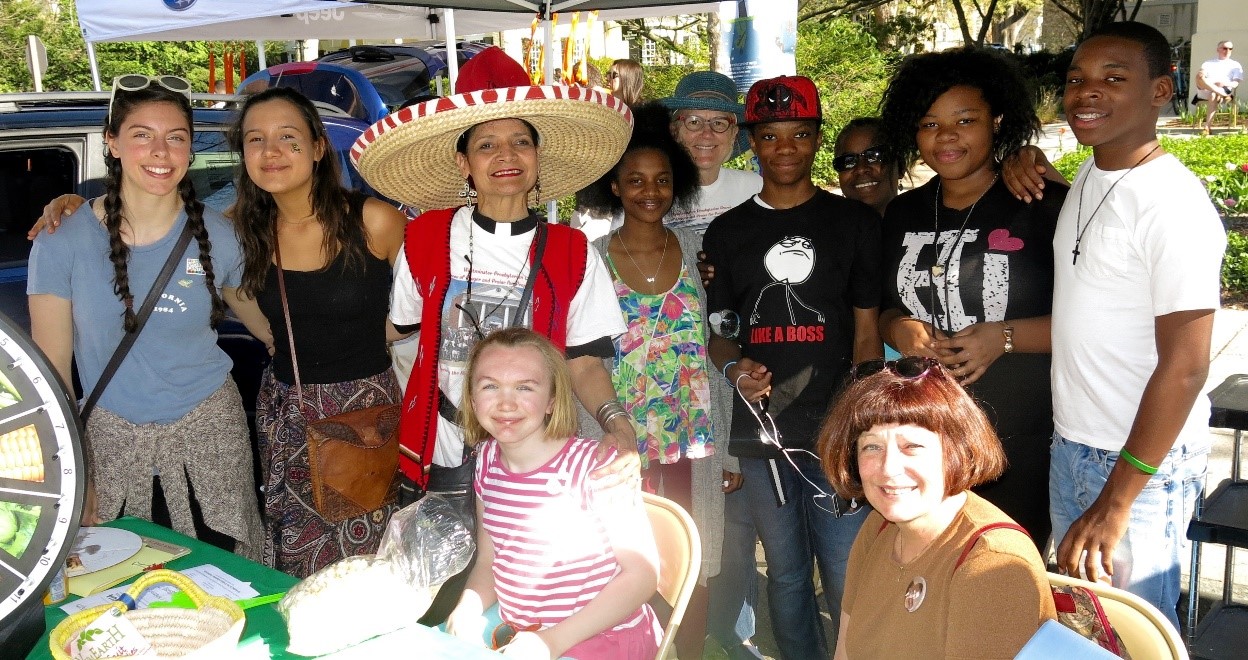
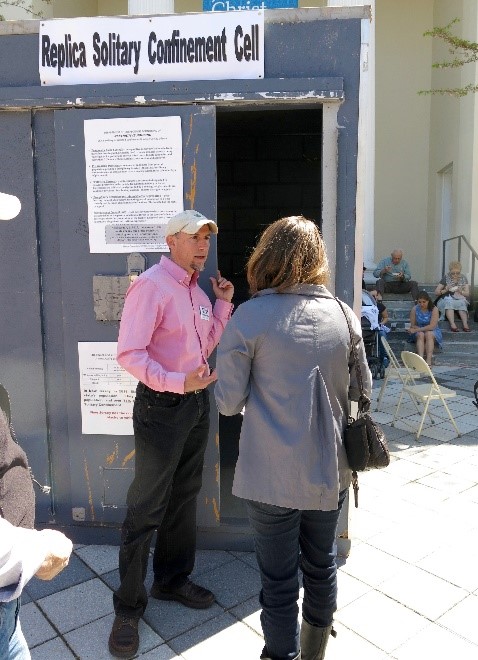
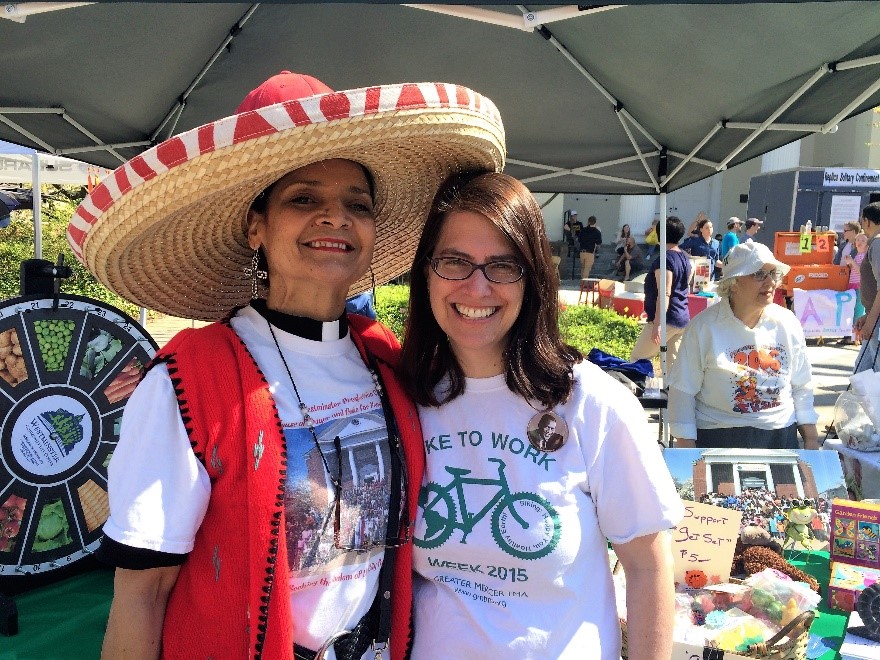
!Muchisimas Gracias to Nassau! Once again Westminster Presbyterian Church and Westminster Community Life Center had the best location at the 2016 Communiversity; right in front of Palmer Square! This year members of Nassau helped us host our information table, and also sold beautiful soap to raise money for our Get SET After School Program. Westminster also helped Nassau coordinate with the Campaign to End the New Jim Crow Trenton/Princeton Chapter an interactive experience within a solitary confinement cell replica. Westminster’s pastor and members enjoyed taking photos with our partners: i.e. Nassau members, Princeton Mayor Liz Lempert, and Mercer County Freeholder Samuel Frisby, and the Campaign to End the New Jim Crow Trenton/Princeton Chapter members.
3rd Annual Trenton Unity Walk: Sunday, May 1, 2016
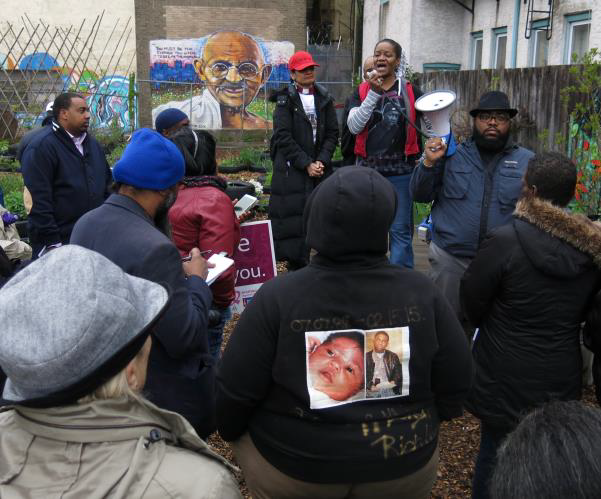
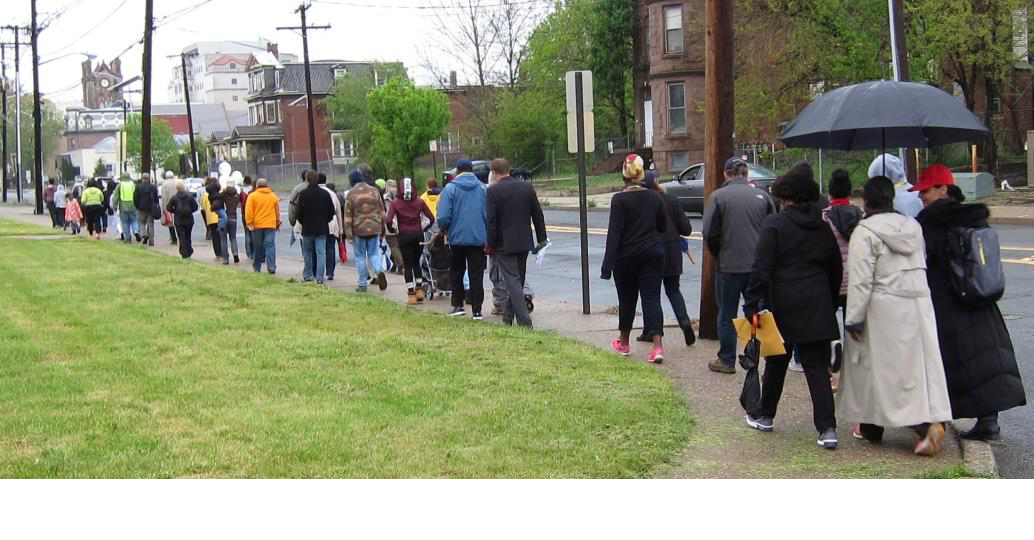
Despite the rain, Nassau and Westminster leaders and members helped lead over 100 people of all faith traditions to walk in remembrance of the lives of men, women, and youth killed by violence in the City of Trenton during the past year. Pictures and short bios of the victims of violence, and resources to support the grieving families were distributed. Prayers in song and word were shared at the sites of violence. After simultaneously departing from Westminster Presbyterian Church and the Islamic Center of Ewing all the participants gathered at the Ghandi Garden. Kim Ford, who lost her son to violence in March 2015, and Councilman Duncan Harrison Jr. who lost his mother and a best friend to violence, challenged everyone to keep working to end the violence in Trenton. Men of Hope prayed for all the youth present.
Intergroup Dialogue (IGD) Retreat: May 7, 2016
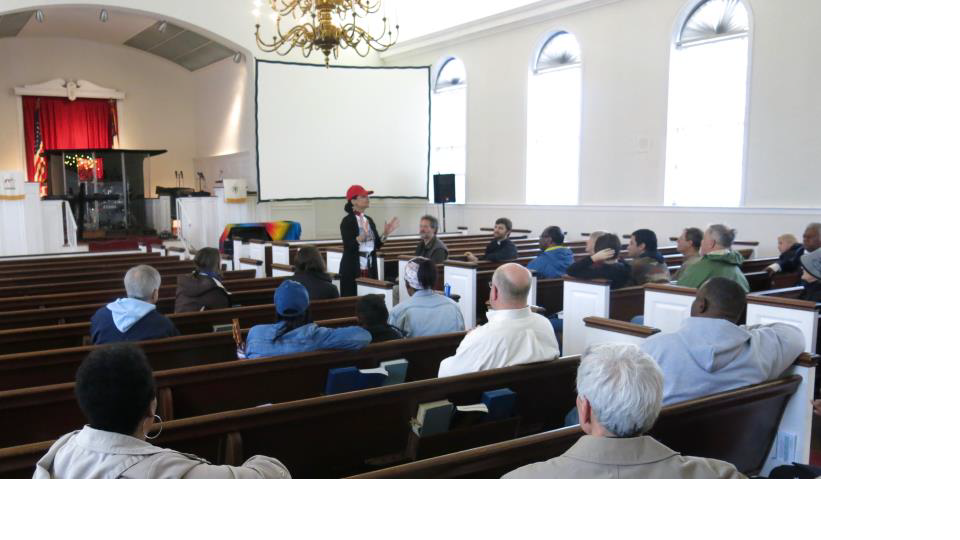
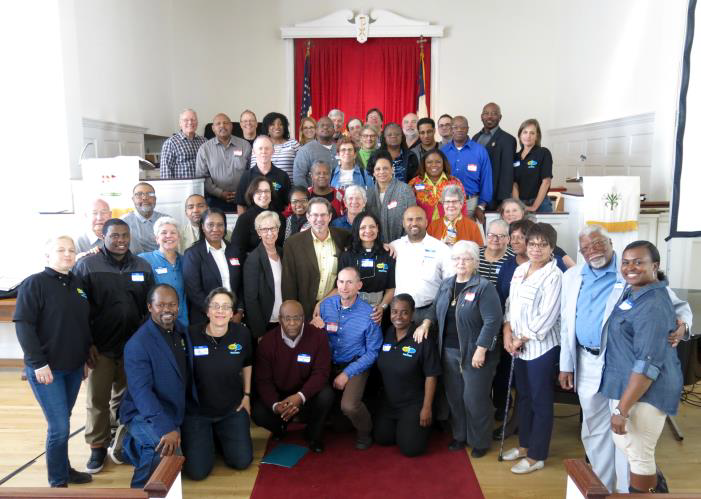
Over 50 pastors, leaders, and members representing Shiloh Baptist Church, the Presbyterian Church of Lawrenceville, Nassau Presbyterian Church, and Westminster Presbyterian Church participated in an Intergroup Dialogue Retreat on Saturday, May 7, 2016 at Westminster called, A Conversation Among Four Churches. The IGD Retreat was led by the New Jersey Intergroup Dialogue Coalition founded by Rev. Dr. D A Graham, and facilitated by members of Nassau and Westminster that he had trained over three months in 2015. The retreat was an 8-hour workshop that explored the intersection of identities including race, ethnicity, gender, religion, social class, and sexual orientation. The workshop allowed participants to learn about various social identities as well as build knowledge to engage in dialogue with others regarding identity. The feedback was so positive that we are looking forward to planning another Intergroup Dialogue Retreat in the near future at Nassau.
Joint Worship & Ecumenical Advocacy Days: June 5, 2016
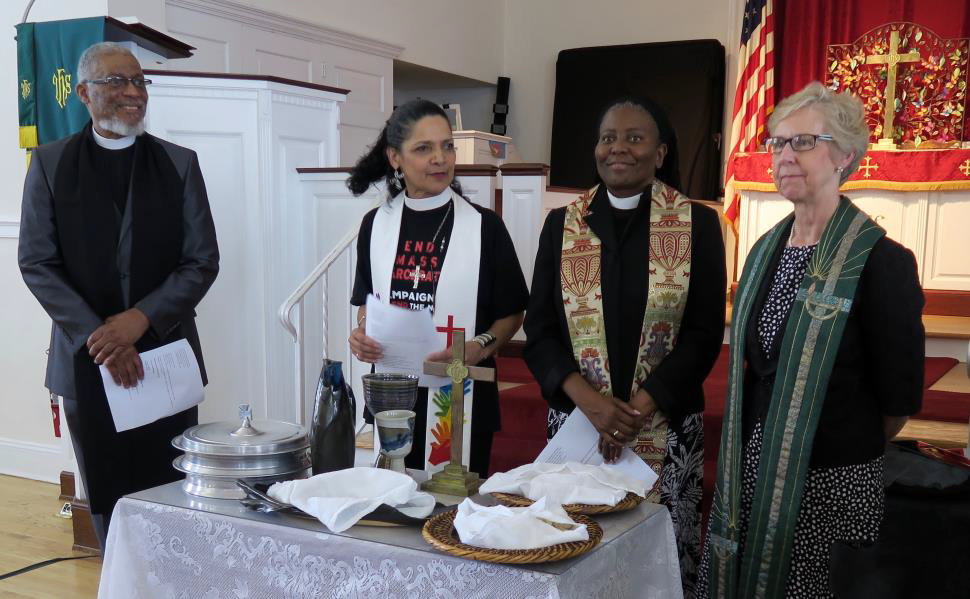
Westminster enjoyed welcoming and worshipping with 25 members from Nassau on Sunday, June 5. In order to expose Nassau members to some of our multiple Trenton partners, we acknowledged the presence of representatives from A Better Way, Inc., the Campaign to End the New Jim Crow Trenton/Princeton Chapter, East Trenton Community Center, Yielded Vessels Fellowship Ministries (YVFM), and Men of Hope. Nassau’s Minister of Christian Education, Joyce MacKichan Walker, the Rev. Nadira Keaton and Elder Thomas Keaton of YVFM, and Pastor Karen Hernandez-Granzen officiated the Lord’s Supper in English and Spanish. Trenton Council Woman Marge Caldwell-Wilson, a Scottish Presbyterian, also worshiped with us. Rev. Patti Daley, led us in a prayer for Shalom in the City of Trenton.
Following worship, Nassau’s youth and Westminster’s Elder Jacque Howard did an outstanding job sharing what they had learned at the annual 2016 Ecumenical Advocacy Days in Washington, D.C.
UPDATE from Cetana Educational Foundation:
Chenault Spence, the president of the Cetana board, just returned recently from a visit to Myanmar. While there he visited the Cetana learning center in Kyaing Tong, located in the “Golden Triangle” near the border with Thailand, Laos, and China. Cynthia Paul, who received her degree in English language teaching thanks to a Cetana scholarship, returned to Kyaing Tong a few years ago to found the learning center, which already has over 300 students studying English. Cynthia, always full of energy and new ideas, has now launched a new initiative at the learning center called the “Rice Village Project.” Her goal is to provide an opportunity for young girls in remote villages to continue their education. The Myanmar government provides schooling through grade 5. However, after that, many students, particularly those in poor, remote areas, drop out because there are no opportunities for them to advance. Most go to work in the rice fields of their villages, but some girls become the victims of traffickers as they seek to earn more money for their families. For this reason, Cynthia’s initial focus is on female students.
Currently she has three young girls in residence in Kyaing Tong. They come at the recommendation of their teachers from distant villages and live at the learning center, while their parents provide modest “compensation” in the form of rice. During the day they attend regular school in Kyaing Tong, 6th grade through high school, and in the afternoons, they attend English language classes at the learning center.
Eventually, Cynthia would like to expand this program to include as many as 30 girls. Cetana’s board is submitting proposals for funding of this expanded program to local and international NGOs as well as seeking funding from private individuals. If financing is successful, Chenault Spence says, “It will be possible to acquire proper dormitory space and hire a staff to oversee the girls and provide academic support. These young girls will then have a chance not only to graduate from high school, but also to master English and access possibilities unimaginable in their home villages.”
UPDATE from Villages in Partnership
Thank you for supporting our small team for this year’s water walk we were able to raise $1,500 for our Nassau Presbyterian walking team. We walked for Triza who lives with her elderly grandmother and so desperately wants to go to school, hopefully Stephanie Patterson will get to meet her this year while on a Friendship trip to Malawi, Africa with Villages in Partnership July 22-30.
To help Stephanie while on her friendship trip with Villages In Partnership she will need to bring a suitcase filled with all sorts of items, the suitcase will be located in the main office, suggestions are listed below:
Ibuprofen
Adult/children’s vitamins
Nebulizers/inhalers
Anti-fungals
Triple antibiotics
Yarn
Knitting needles
Fabric
Flip flops
Tooth brushes
Tooth paste
Soap
Children’s percussion instruments
Cash for needed items on the ground
Lightweight blanket
Thank you for helping us fill Stephanie’s suitcase
We look forward to hearing about Stephanie’s trip upon her return.
Dear congregation, and especially the families of our children and youth choristers,
I would like to share with you the plans for our choral programming for children and youth in the coming program year. Ingrid Ladendorf, Early Childhood Advisor at the Diller-Quaile School of Music and adjunct faculty at TCNJ, will continue as the director of the Joyful Noise Choir, masterfully introducing the joy of singing to our youngest voices and continuing to bless our church with her cheerful and caring spirit. Our own Patty Thelwill serve as the interim director of the Carol Choir, Choir 3-4-5, the Middle School Choir, and Cantorei for the 2016-2017 season. Patty brings many gifts to our choral programming, including a wealth of experience as a music educator, church choir director, and Sunday school teacher. Past director of the Trenton Children’s Choir, Patty is also the founder and director of the Westminster Conservatory Choir, and she is the director of the Middle School Vocal Institute at Westminster. Our children and youth will be in good hands with Patty and Ingrid.
We will maintain the same structure for choir rehearsals that we had this past year, and we intend on upholding traditions such as the Christmas Pageant and the Christmas Alumni Choir. At the same time, there will be reflection on our choral programming in conversation with the congregation, and a search will be launched in late fall to find permanent leadership for our children and youth choirs. While the position will no longer be full-time, I am confident that we can attract the right person to be a part of our next chapter in our church’s vibrant and integral choral program for children and youth.
Thank you all for your support of the ministry of music at Nassau, and thank you for upholding our church in prayer as we grow in faith through song.